Siemens Healthineers and softgate have established a longstanding partnership, collaborating for many years. Our developers have successfully contributed to various projects associated with teamplay.
Cloud connectivity to
Cloud Connectivity at a Glance
Cloud integration of medical devices and systems is reshaping healthcare, enabling modern, connected, and efficient care models while providing tangible benefits:
- Secure and adaptable access to medical records from any location
- More efficient treatment and workflow processes
- Connected, patient centered applications
6 Benefits of Using Medical Cloud Application
How We Add Value
Clarifying Data Storage and Responsibilities
We analyze data protection requirements, latency, regulatory constraints, and device dependencies to create a solid decision making basis for the optimal distribution between local processing (edge) and cloud services. We take into account both technical and organizational conditions of existing IT landscapes and document all architectural decisions in a structured and transparent manner.
Challenges:
- Unclear regulatory requirements regarding which data must remain local
- Varying latency and availability requirements depending on the use case
- Heterogeneous devices, systems, and proprietary interfaces
- Dependencies on existing IT infrastructures and operating models
- Lack of transparency regarding responsibilities across edge, cloud, and operations
Benefits:
- We provide a well founded analytical basis for decisions on edge and cloud processing
- Risks are minimized through early consideration of regulatory requirements
- We design concepts for predictable scalability and extensibility of the system landscape
- Efficient alignment between IT, business units, and external partners
- We establish the foundation for informed architectural and development decisions
Development of Secure Cloud and Edge Components
We design and implement robust software components with clearly defined REST APIs, secure communication, and end-to-end authentication and authorization concepts. Our approach includes role models, access controls, and protection of sensitive medical data throughout the entire lifecycle.
Challenges:
- Complex security requirements when processing sensitive healthcare data
- Different authentication and authorization concepts across system boundaries
- Consistent API design across heterogeneous devices and backend systems
- Secure communication between cloud, edge, and on-premise components
- Traceability and maintainability over long product lifecycles
Benefits:
- Clearly structured, understandable, and extensible interfaces
- End-to-end security concepts from device level to the cloud
- Reduced integration effort for existing and future systems
- Improved maintainability and long-term evolution
- Reliable foundation for regulatory audits and inspections
Standardized Deployment of Applications in Cloud and Edge Environments
We design container-based software architectures and orchestration concepts for scalable, resilient, and maintainable system landscapes. Existing operating models and customer target platforms are fully considered.
Challenges:
- Different target environments (cloud, on-premise, edge)
- Resource constraints on edge systems
- Secure operation of distributed container environments
- Updates and rollbacks without disrupting critical processes
- Transparency of configurations and dependencies
Benfits:
- Consistent runtime environments across all target platforms
- High portability and independence from infrastructure specifics
- Scalability to meet growing demands
- Improved resilience and maintainability
- Simplified operation of complex system architectures
Automated Deployment and Release Concepts
We support the design and implementation of structured CI/CD pipelines to enable reproducible deployments, controlled rollouts, and transparent approval processes within existing cloud and IT infrastructures.
Challenges:
- Error-prone manual deployments
- Multiple environments (development, testing, production)
- High requirements for stability and availability
- Traceability of changes and releases
- Coordination between development, operations, and quality assurance
Benefits:
- Reproducible and traceable releases
- Reduction of manual error sources
- Faster delivery of updates and fixes
- Controlled rollouts with clear approval processes
- Full transparency of versions and changes
Systematic Testing Strategies for Quality and Security
We design and implement automated tests at multiple levels to ensure functionality, security, and stability of complex cloud and edge systems at an early stage.
Challenges:
- High system complexity with many dependencies
- Different testing requirements for cloud and edge components
- Maintaining quality with frequent changes
- Reproducible tests across multiple environments
- Early detection of security and integration issues
Benefits:
- Early identification of defects and risks
- Higher software quality and stability
- Reduced manual testing effort
- Increased confidence in releases and changes
- Strong foundation for regulatory compliance and evidence
What Challenges Are Associated Cloud Connectivity in Healthcare?
Connecting medical devices and systems to the cloud opens up new opportunities for healthcare providers. Device data can be securely accessed and analyzed, service and maintenance can be delivered across locations, and clinical workflows can be optimized for greater efficiency. In practice, however, cloud connectivity in healthcare comes with technical, regulatory, and security-related challenges that must be addressed early on to ensure reliable operation in hospitals, medical practices, and care facilities.
Technical Challenges
Cloud connectivity for medical devices is technically complex. Heterogeneous interfaces, missing standards, and high demands on performance and stability make integration challenging. softgate addresses this complexity with standards-compliant cloud and IoMT connectivity (DICOM, HL7, FHIR) and scalable, robust software architectures. We’re supporting our customers from initial analysis and implementation through to ongoing operations.
Organizational Challenges
Implementing cloud-based systems is not only a technological shif, it also requires organizational change. At the same time, many healthcare institutions lack the in-house IT expertise needed to independently operate or monitor cloud connections. That’s why we take a holistic approach: from architecture and implementation to system launch We combine expertise, guidance, and hands-on support to empower healthcare providers with secure and efficient cloud-based solutions in daily practice.
Legal and Regulatory Risks
Regulatory frameworks such as telematics infrastructure, electronic patient records, and the Medical Device Regulation (MDR) are constantly evolving. We help organizations planning new cloud connections, as well as those already using cloud solutions, stay ahead of changing requirements to ensure full compliance, security, and seamless operations.
Benefits of Cloud Connectivity for Manufactors and Operators
Direct integration of medical devices with the cloud offers manufacturers and operators new opportunities that go far beyond simple data collection.
Proactive Maintenance and Remote Monitoring
Continuous transmission of operational data to the cloud enables early detection of maintenance needs and proactive prevention of failures. Intelligent algorithms analyze device conditions, identify wear patterns, and allow for predictive planning of service operations—reducing unplanned downtime and lowering maintenance costs.
Usage Pattern Analysis
Cloud-based analysis of usage data provides valuable insights into the real-world application of devices in clinical practice. This enables manufacturers to identify user errors, common use cases, or optimization opportunities and implement targeted improvements in product development. At the same time, training and support offerings can be tailored to actual needs.
Automated Updates and Feature Rollouts
Device-to-cloud connectivity enables secure and controlled distribution of software updates and new features. Manufacturers can deploy updates centrally, quickly address security vulnerabilities, and deliver innovative features—without on-site intervention and with full traceability.
Quality Management and Compliance
Centralized collection of operational and usage data supports regulatory compliance and simplifies audits. Manufacturers gain transparent visibility into device status, can document sources of errors, and continuously monitor product quality.
What We Have Achieved for Our Costumers
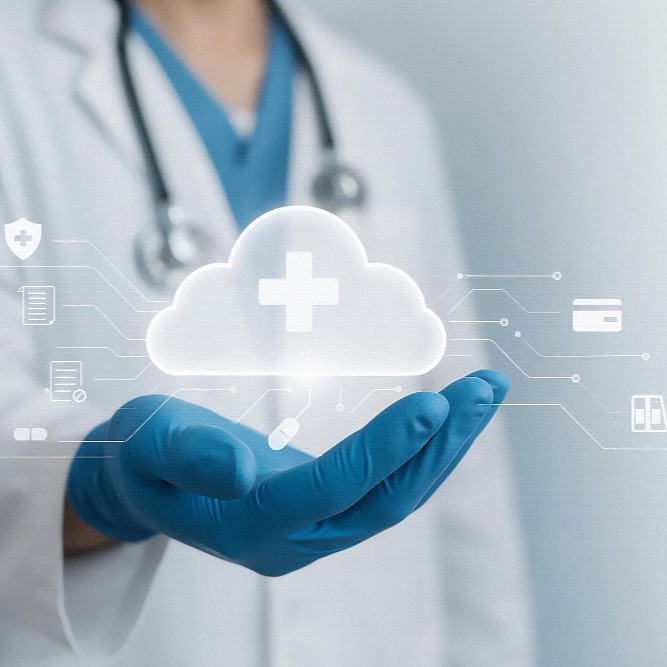
Cloud-based software for medical data
Our client operates a medical cloud storage service. The primary use case is the long-term archiving of medical image and video data in the cloud in compliance with data protection…
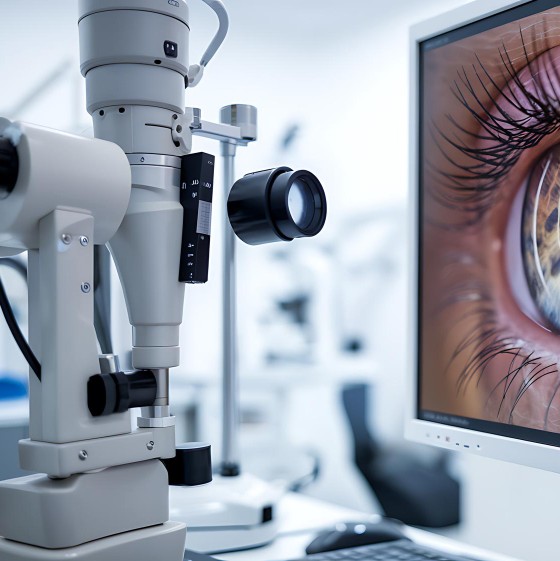
Cloud Integration for Mobile Eye Diagnostics via a DICOM Gateway
A growing problem in Germany is the inadequate provision of ophthalmological care in rural areas – this is exactly where this project comes in. Mobile examination units enable ophthalmological screenings…
Contact us:
Please feel free to contact us if you have any questions. We would be happy to give you an initial overview of how you can achieve your individual goals with our efficient solutions and team of experts.